
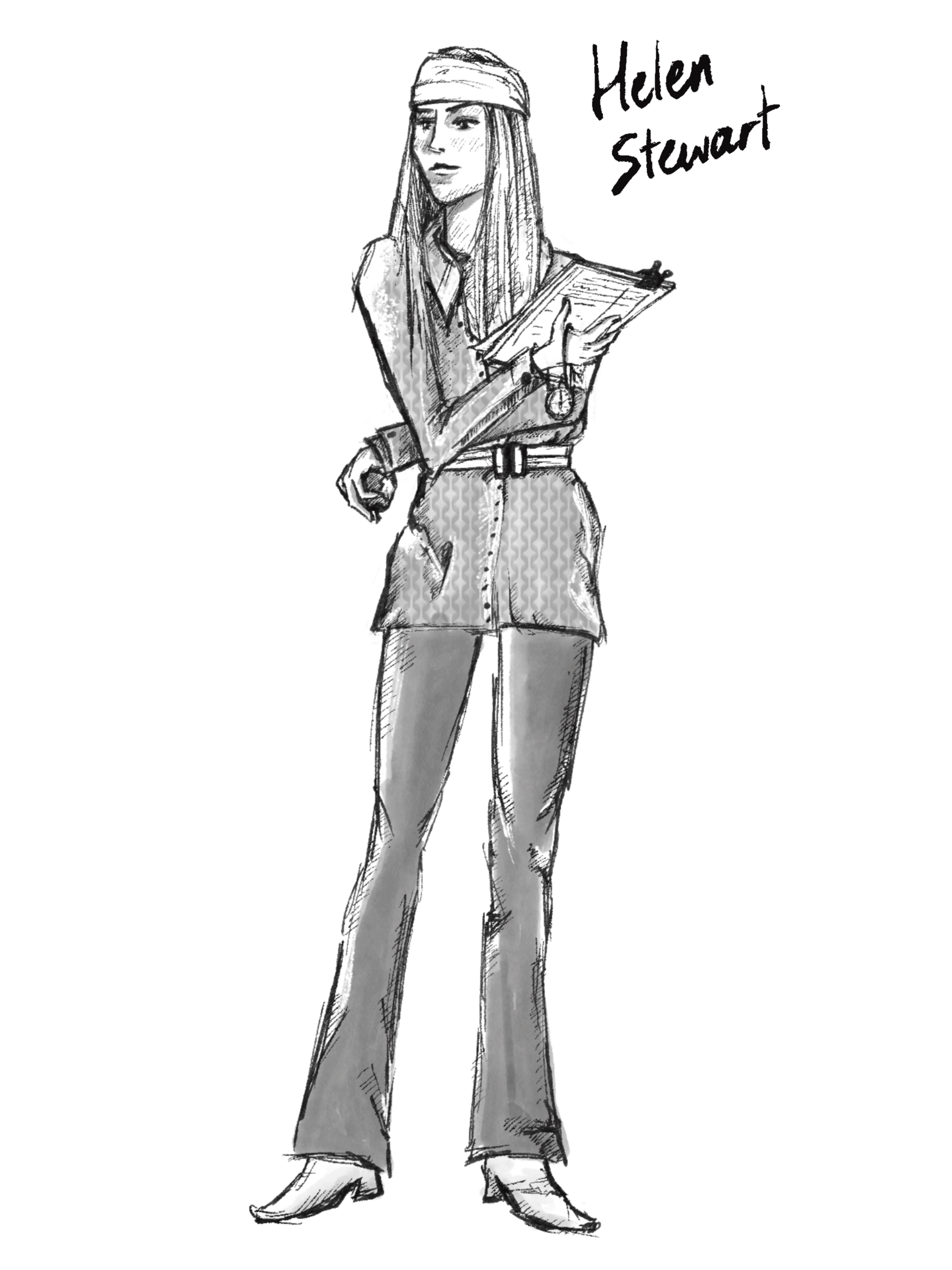
Original illustrations by Dori Bano @doribno
The 2025 Formula One championship featured intense qualifying sessions, producing some of the closest results the sport has seen in its 75-year history. Budapest marked the tightest Q3 in history, with the top 10 drivers separated by just 0.577s. Earlier in the season, Max Verstappen beat Oscar Piastri by a tenth to take pole by the smallest margin in Saudi Arabia. In these moments of fervour, the cameras often pan to the garages in search of one key shot: their partners' reaction.
They stand at the back of the room, huddled in the viewing area alongside team personnel and other high-profile guests – actors, musicians, and celebrities – who may also be featured in the broadcast. Accustomed to the spotlight their relationship has brought them, they appear indifferent when their faces first flash on the live feed, maintaining their focus on the data displays and the information being relayed through their team headset. A carefully considered pose. If the pictures linger long enough, they will acknowledge their presence with a simple smile. Their cheers and tears projected for the entertainment or dispute of the international audience.
The involvement of WAGs, a term coined by British media to describe the wives and girlfriends of sportsmen in the early 2000s, is nothing new. Their presence dates to the sport’s inception in 1950, although their roles and notability have shifted across eras. Whilst the common thread of supporting their partners undoubtedly links the generations of women together, the differences between Bette Hill, Marlene Knaus, Corrina Schumacher and Nicole Sherzinger are stark.
In the early years of the sport, drivers’ wives and partners held the coveted position of timekeeper for their husbands’ laps, a role now extinct due to the invention of electronic transponders. The role also extended to officials, team personnel and other family members, but these were less prominent in the media.
Armed with their mechanical stopwatches and lap charts, they were found outside of the garages, perched in chairs along the pit lane with only a metal barrier separating them from the track. The times they recorded were imprecise compared to modern standards due to the constraints of the equipment they used – physically clicking each lap and jotting it down could only be so accurate. This left the laps being recorded to the nearest tenth, or occasionally hundredth, far from the thousandths that are now available to decide positions today.
Lady Helen Stewart, the wife of three-time world champion Sir Jackie Stewart, is one of the most documented timekeepers from the 1960s and 1970s. The pair married three years before his Formula One debut in 1965, with Helen already bearing the responsibility of Jackie’s times and maintaining it throughout the nine years he raced in the championship. Helen’s husband described her timekeeping as ‘first-class’, partially attributing her skills to his 1969, 1971 and 1973 titles.
The most iconic photographs of Helen involve her wearing her wide-brimmed sun hats in a variety of shades, a staple of early seventies fashion, which many other wives also sported. A lesser-known shot from the 1969 Italian Grand Prix shows her perched in her high chair in the pit lane, carefully noting down times, distinctive in her bright yellow attire but without the aforementioned hat. Her husband's mechanics are to the side of her, the ultimate image of composure – and the opposite of Helen's concentration – as they chatter amongst themselves and drink beer.
At the 1971 Monaco Grand Prix, Helen was photographed alongside her close friend, Nina Rindt, the widow of Jochen Rindt. Nina lost her husband in a fatal crash during a practice session before the 1970 Italian Grand Prix, four races before he became Formula One’s only posthumous champion. She was timekeeping that weekend, watching out for her husband to cross the line for the fifth time in the session. Jochen’s final lap of his career ended at Curva Parabolica, a short distance away from the pit lane where Nina awaited him. The duty of lifting the championship trophy fell to her in her husband’s absence, but like many wives, Nina had always assisted his racing efforts.
Away from her timekeeping, Nina was a prominent fashion model, mirroring the many modern wives and girlfriends who are endorsed by high-profile fashion and lifestyle brands. She starred in magazines such as Vogue and Life, though her widespread influence stemmed from the accessories she sported in the paddock.
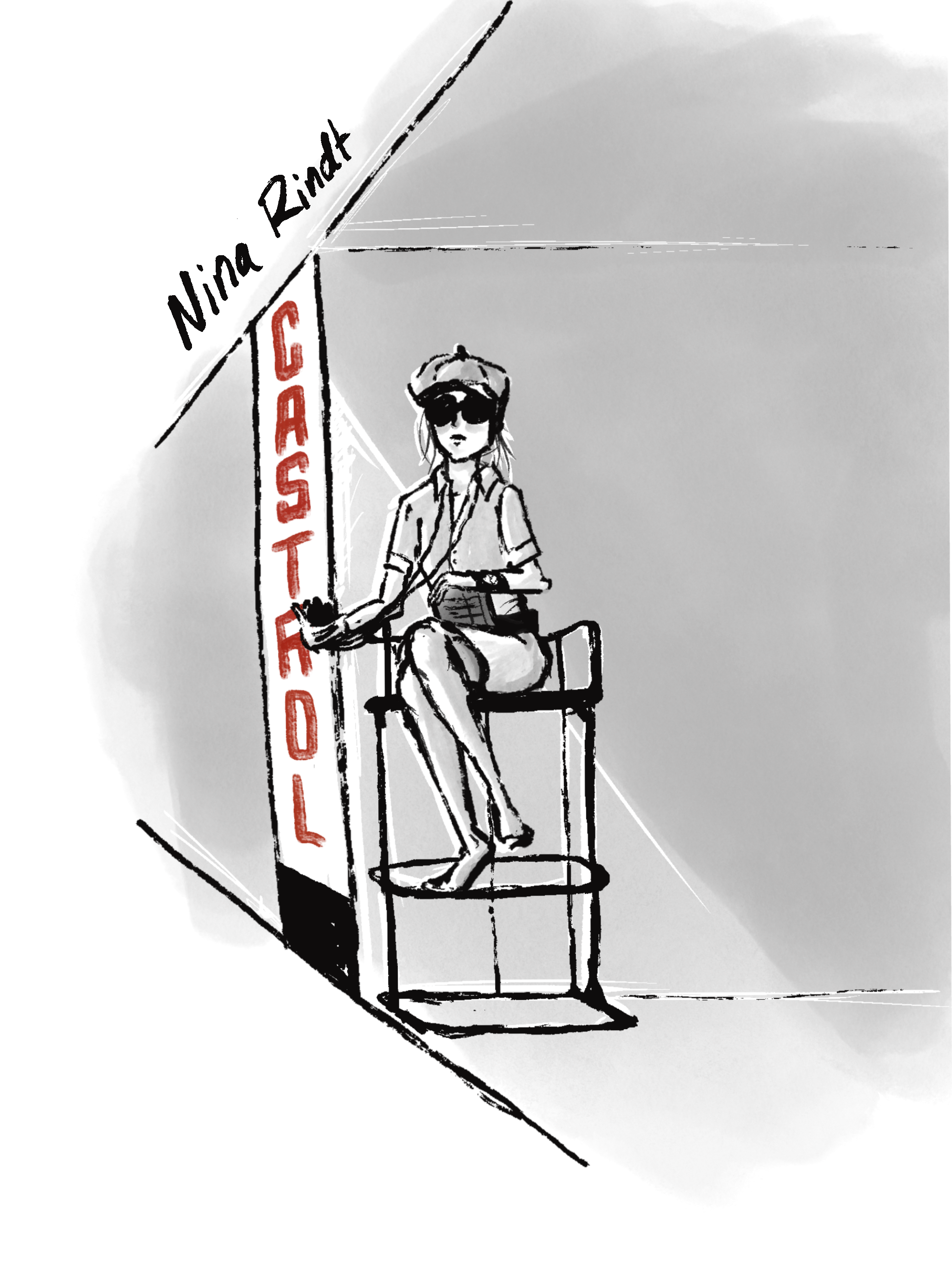
Nina’s Universal Genève Compax chronograph was more than just a statement piece – she was hardly spotted without her gift from Jochen. It didn’t take long for the watch to be nicknamed ‘the Nina’, after the woman who had made it so sought after, with its panda dial and the addition of the thick Bund strap. Alongside this, she often brought her much larger Omega stopwatch to aid in her duties as timekeeper. The bright orange shade was unmistakable in photographs and in the pit lane.
Timekeeping itself fell under threat at the start of the 1974 season. Jackie Stewart had retired months prior after taking his third and final championship, partly due to losing so many friends throughout his racing years, which included Jochen. The new season saw the introduction of electronic timing, with TAG Heuer heading the approach. The luxury Swiss company still exists in the sport today, having returned to the position of official timekeeper in 2025.
Despite the cars now being timed automatically by radio transponders, lap charts and clicking stopwatches remained, with the likes of Barbro Peterson continuing on the art. Barbro began timekeeping for her then-boyfriend, Ronnie Peterson, at the start of his Formula One career. She soon became the next muse for photographers, often pictured in her seat on the pit wall and accompanied by fellow wives Maria Helena Fittipaldi and Pam Scheckter.
Barbro named her only child in homage to Nina Rindt, three years before she would share her widow’s fate when Ronnie passed away after a multi-car pile-up at the 1978 Italian Grand Prix. It had been eight years and six days since Jochen Rindt died at the same track.
Pictures from the same season show that Barbro was still active in her timekeeping. One particular set of shots from the Belgian Grand Prix details her role in action, setting her in front of Lotus team owner Colin Chapman, who also kept the time for his drivers. Serious and absorbed throughout the race with her importance, she celebrates alongside the rest of the team when her job is over, and her husband finishes on the podium alongside his teammate.
But the death of Barbro’s husband closed the chapter on one of the last of her kind. By the start of the new decade, the technology had surpassed the need for timekeepers. The new drivers who entered the paddock brought partners who were unaccustomed and uninterested in the practice – there was simply no need to write down results when there were entire companies and computers to do it for them.
Despite their original role becoming extinct, drivers’ wives and girlfriends have held their position in the sport, adapting to the needs of the audience over time. They now exist under the lens and scrutiny of social media, with more publicity than those who came before them.
The next time Alexandra Saint Mleux or Kelly Piquet appear on your screen, notice the absence of the mechanical stopwatches in their hands and take a moment to remember their predecessors who paved the way for modern timing technology, whilst also creating a space for future generations of women in motorsport.